The PLAY Project Autism Intervention: Frequently Asked Questions
Get answers to common questions about The PLAY Project, including how our developmental, relationship-based autism intervention works, who it is for, the research behind the model, professional training, parent coaching, insurance, certification and more.
Whether you’re a parent looking for support, a professional exploring training, or an organization interested in implementing The PLAY Project, we’re glad you’re here.
We’ve gathered answers to the questions we hear most often about The PLAY Project, including how our developmental, relationship-based approach works, who it’s designed for, the research behind our model, professional training opportunities, insurance, certification, and more.
If you can’t find the answer you’re looking for, please don’t hesitate to contact our team—we’re always happy to help you find the information or resources you need.
FAQs
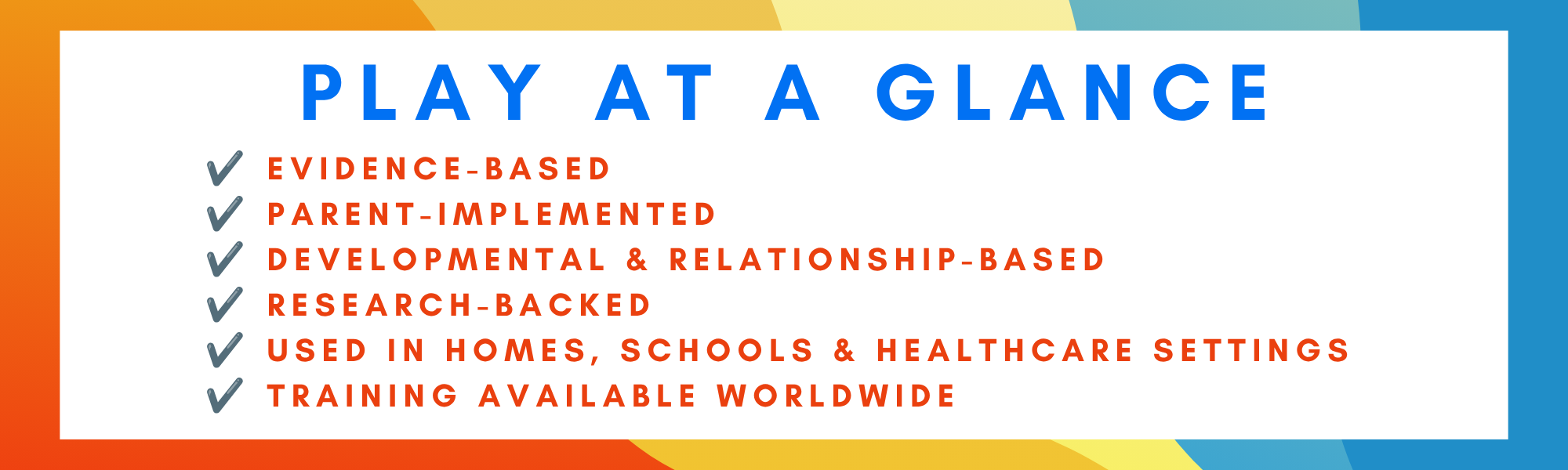
The P.L.A.Y. Project is an intervention model for young children with autism. We use a developmental, relationship-based (non-ABA) approach that is playful and effective. We take play seriously!
Through professional training, parent coaching, teacher education, and organizational partnerships, The PLAY Project helps adults build stronger relationships, deeper engagement, and meaningful developmental growth through play and everyday interactions.
Originally developed as a parent-mediated autism intervention, The PLAY Project has expanded to train professionals, support schools, and partner with organizations seeking family-centered, neurodiversity-affirming approaches to child development.
The PLAY Project works by teaching the adults in a child’s life—parents, caregivers, teachers, and professionals—how to use developmental, relationship-based strategies during everyday interactions. PLAY teaches adults how to:
- follow the child’s lead
- encourage communication
- increase shared attention
- build social connection
- support emotional engagement
- have fun!
Depending on the setting, PLAY may include:
- Parent coaching and support
- Professional training and certification
- Teacher and classroom consultation
- Organizational implementation and workforce development
- Developmental assessment and child profiling
- Video feedback and reflective coaching
By building the skills of the adults who spend the most time with children, PLAY creates more opportunities for joyful connection, meaningful communication, and practical learning, leading to developmental growth throughout all daily routines and play sessions.
Yes. The PLAY Project is an evidence-based, developmental, relationship-based intervention supported by peer-reviewed research and grounded in the growing body of evidence for parent-implemented autism interventions.
The PLAY Project has been evaluated in a large multi-site randomized controlled trial involving 128 young autistic children and their families. Researchers found that parents who participated in PLAY became more responsive and effective in engaging their children, while children demonstrated improvements in social interaction and communication The study was published in the Journal of Developmental & Behavioral Pediatrics, one of the leading peer-reviewed journals in the field.
Continued studies have shown improvements in areas such as parent-child interaction, engagement, and developmental growth. We are committed to combining evidence-based practices with a relationship-centered approach that empowers families and builds on each child’s strengths.
The PLAY Project trains, the adult who care for children with autism or developmental differences.
This includes:
- Parents and caregivers
- Early intervention providers
- Speech-language pathologists
- Occupational therapists
- Social workers
- Psychologists
- Educators and school personnel
- Healthcare systems and community agencies
- Early childhood educated professionals
Whether you are a parent looking for support, a professional seeking specialized training, or an organization interested in implementation, The PLAY Project offers pathways to learn and apply developmental, relationship-based practices.
Organizations can choose from standard PLAY Project training options or explore customized options based on their team’s needs.
Some organizations begin by having a few staff members complete training first, while others choose to train a larger group together. We can help organizations think through what makes the most sense based on their goals, staff size, timeline, and the families they serve.
Training and partnership options may include:
- standard PLAY Project training
- private group training
- customized training options
- staff certification pathways
- consultation and follow-up support
- implementation planning
- ongoing coaching and support
If you are interested in hosting a PLAY Project training at your organization, please contact info@playproject.org
The PLAY Project partners with a variety of organizations that support autistic children and families, including:
- early intervention programs
- healthcare systems
- hospitals and clinics
- schools and educational programs
- nonprofit organizations
- universities
- community mental health agencies
- autism service providers
- military programs
- Therapy practices
Organizations use the PLAY Project to support parent coaching, developmental intervention, workforce training, and family-centered autism services.
The PLAY Project serves children with autism or developmental differences. The PLAY Project is most often used with autistic children between 9 months and 6 years of age. However, our approach is guided by developmental level rather than chronological age. As a result, PLAY has been successfully implemented with older children, adolescents, and adults in home, school, and community settings.
Parents know their child better than anyone else. The PLAY Project is built on the belief that meaningful growth happens through everyday relationships and interactions. By coaching and supporting parents, we empower families to create more opportunities for connection, communication, and learning throughout the day—not just during therapy sessions.
When parents feel confident and supported, those benefits can extend far beyond a single session and into everyday life.
Yes. The PLAY Project focuses on building connection, communication, and meaningful engagement while honoring each child’s unique strengths, interests, and ways of experiencing the world.
Our approach is rooted in relationships, respect, and supporting families as they nurture their child’s development in ways that feel authentic, joyful, and meaningful.
No. The PLAY Project is not an ABA (Applied Behavior Analysis) program. It does not emphasize behavior change as a primary goal.
instead, The PLAY Project is a developmental, relationship-based intervention that focuses on building connection, communication, engagement, and emotional development through play and everyday interactions. By following the child’s interests, building on their strengths and creating meaningful opportunities for interaction throughout the day, PLAY helps parents, caregivers, educators, and professionals nurture the child’s inherent urge to grow developmentally.
The PLAY Project is rooted in developmental science and relationship-based practices, with a strong emphasis on parent coaching and empowering the adults who know the child best.
While PLAY and ABA are based on different theoretical foundations and use different strategies, some families and organizations choose to incorporate PLAY alongside other services. The PLAY Project can complement a variety of educational, therapeutic, and support programs when there is a shared commitment to supporting the child’s development, communication, and well-being.
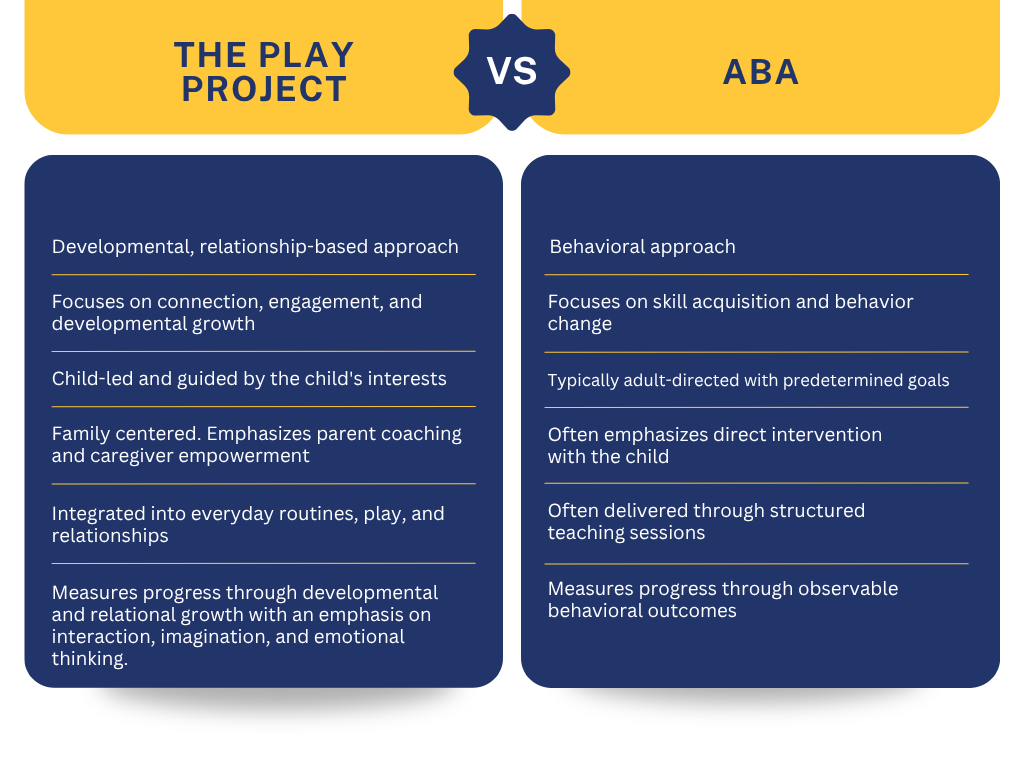
The PLAY Project and ABA (Applied Behavior Analysis) are based on different approaches to supporting autistic children.
The PLAY Project is a developmental, relationship-based intervention that focuses on helping children grow through meaningful relationships, play, and everyday interactions. PLAY emphasizes following the child’s lead, building emotional connection, supporting developmental growth, and coaching the adults who spend the most time with the child.
ABA is a behavioral approach that uses principles of learning and reinforcement to teach skills and support behavior change.
Some key differences include:
The PLAY Project is built on the belief that children learn best through trusting relationships and joyful interactions with the people who know them best. By strengthening the capacity of parents, caregivers, educators, and professionals, PLAY helps create opportunities for learning and development throughout the child’s day.
Families often choose the approach that best aligns with their goals, values, and their child’s individual needs. Some children participate in PLAY alongside other educational, therapeutic, or behavioral services as part of a comprehensive support plan.
The PLAY Project shares many values with other developmental, relationship-based approaches, including DIR/Floortime®, and other parent-implemented interventions. All of these models recognize the importance of relationships, engagement, communication, and supporting development through meaningful interactions with caring adults.
What sets The PLAY Project apart is its specific focus on autism, backed by an NIMH-accepted randomized controlled trial. The model places strong emphasis on training and coaching the adults who spend the most time with children—including parents, caregivers, educators, and professionals—through a practical, evidence-based framework that helps families and professionals use developmental strategies during everyday routines, play, and naturally occurring interactions.
The PLAY Project also offers online and asynchronous courses alongside a structured training and certification pathway for professionals, making the program highly scalable. With proven experience supporting large-scale workforce implementation, PLAY provides implementation support for schools, healthcare systems, early intervention programs, and community organizations—allowing its principles to be integrated across home, school, and community environments.
Parents can access The PLAY Project by connecting with a trained and certified PLAY Project Consultant (PPC) who provides coaching, guidance, and support tailored to their child and family’s needs. Consultants work with families to help them use PLAY strategies during everyday routines, interactions, and play experiences.
Parents can use The PLAY Project’s Consultant Map to find a local provider or connect with a TelePLAY consultant who offers services remotely.
In addition to direct services through a PPC, families can access PLAY resources, educational materials, webinars, books, and online learning opportunities on our website and within our PLAY Store to deepen their understanding of the PLAY approach and support their child’s development. We highly recommend our Parent Starter Kit!
Insurance coverage varies depending on your state, provider, and individual insurance plan.
We encourage families to contact their insurance provider and local PLAY Project providers to learn more about available coverage, reimbursement options, and services in their area. PLAY can be billed and covered through codes provided by medically licensed individuals (i.e. OT, SLP, MSW, etc.)
Yes. The PLAY Project is an approved provider of Continuing Education through ASHA (American Speech‑Language‑Hearing Association) and AOTA (American Occupational Therapy Association).
Some PLAY Project trainings may offer additional CEUs; however, not all courses are CEU‑approved. CEU availability varies by training and is subject to each organization’s approval process.
If you need CEUs for a specific discipline or licensing board, please check the details for each course or contact us for confirmation.
PLAY fits seamlessly into most early intervention, school and professionals settings.
Some teams start with standard PLAY Project training, while others choose private group training or a more customized implementation approach. We work with organizations to think through staff training, service delivery, coaching practices, and long-term support so PLAY Project can feel like a natural extension of the work they are already doing with children and families.
PLAY Project can be used across many settings, including healthcare, education, early intervention, hospital systems, military-connected programs, and community-based services.
Yes. In addition to training, the PLAY Project may provide ongoing consultation, coaching, and implementation support for organizations working to integrate PLAY Project principles and practices into their services.
Support options may vary depending on organizational needs and program structure.
Still have questions?
We’d love to help. Whether you’re a parent, professional, educator, or organization, our team is here to point you in the right direction. Send us an email at info@playproject.org